Boolean Algebra
Partially ordered set \((X, \le)\) is a relational system, but a special type of it can be studied as a universal algebra called lattice \((X, (\wedge, \vee))\). Most applications of lattice theory are associated with Boolean algebras.
Lattice
Lattice \((X, (\wedge, \vee))\) is an algebra derived from a partially ordered set \((X, \le)\) in which infimum and supremum exist for all two-element subsets, such that operations meet \(\wedge\) and join \(\vee\) are defined as \(a \wedge b := \inf \{a, b\}\) and \(a \vee b := \sup \{a, b\}\). Every non-empty finite subset of a lattice has a supremum and infimum. Complete lattice \((X, (\wedge_\alpha, \vee_\alpha))\) is a lattice corresponding to a partially ordered set in which infimum and supremum exist for all subsets; equivalently, a lattice on which any isotone transformation has a fixed point.
The two lattice operations meet \(\wedge\) and join \(\vee\) satisfy: (1) idempotence, \(x ∗ x = x\); (2) commutativity, \(x ∗ y = y ∗ x\); (3) associativity, \((x ∗ y) ∗ z = x ∗ (y ∗ z)\); (4) the absorption law, \((x ∗ y) \star x = x\). Here \(∗\) represents either operation and \(\star\) represents the other operation. Without grouping, meet \(\wedge\) takes precedence over join \(\vee\). Distributive lattice is a lattice that also satisfies the distributive law: \(x ∗ (y \star z) = (x ∗ y) \star (x ∗ z)\); the two instances of this law are equivalent. Completely distributive lattice is a complete lattice that also satisfies the complete distributive law (arbitrary joins distribute over arbitrary meets): for all subsets \(A \subset X\), for all doubly index \(\{J_i\}_{i \in I}\) on the subset \(A = \{x_{i,j} : i \in I, j \in J_i\}\), the following identity holds \(\wedge_{i \in I} \vee_{j \in J_i} x_{i,j} = \vee_{f \in \prod_i J_i} \wedge_{i \in I} x_{i,f_i}\); equivalently, a complete lattice imbeddable in a power set by a mapping that preserves arbitrary supremum and infimum.
For example, the power set \(\mathcal{P}(X)\) of a set \(X\) is a partially ordered set \((\mathcal{P}(X), \subset)\) via the subset relation \(\subset\), and any subset \(\mathcal{A} \subset \mathcal{P}(X)\) of the power set has infimum \(\cap \mathcal{A}\) and supremum \(\cup \mathcal{A}\), so it is a complete lattice \((\mathcal{P}(X), (\cap, \cup))\) via the operations intersection \(\cap\) and union \(\cup\). Moreover, set operations \(\cap\) and \(\cup\) satisfy the complete distributive law, so the power set lattice \((\mathcal{P}(X), (\cap, \cup))\) is a completely distributive lattice.
Theorem (@Stone1937; @Priestley1970; representation for distributive lattices): Any distributive lattice is isomorphic to a sublattice of a power set lattice.
As a corollary, any distributive lattice has the least element \(\bot\) (or \(0\), the identity of \(\wedge\)) and the largest element \(\top\) (or \(1\), the identity of \(\vee\)).
Boolean algebra
Boolean algebra, Boolean lattice, or complemented distributive lattice \((X, (\wedge, \vee, \complement), \{\top, \bot\})\) is a distributive lattice \((X, (\wedge, \vee), \{\top, \bot\})\) endowed with a unary operation called complement \(\complement\) such that \(x \vee \complement x = \top\) and \(x \wedge \complement x = \bot\). Alternatively, [@Huntington1933] axiomatizes Boolean algebra \((X, (\lor, \lnot))\) to be a set \(X\) with a binary operator \(\lor\) and a unary operator \(\lnot\) that satisfies: (1) commutativity: \(x \lor y = y \lor x\); (2) associativity: \(x \lor (y \lor z) = (x \lor y) \lor z\); (3) Huntington axiom: \(\lnot (\lnot x \lor y) \lor \lnot (\lnot x \lor \lnot y) = x\). In this case, the two special elements top and bottom can be defined as \(\top := x \lor \lnot x\) and \(\bot := \lnot \top\). The operator meet can be defined as \(x \land y := \lnot (\lnot x \lor \lnot y)\). Boolean laws refers to the common properties of Boolean algebra: idempotence, commutativity, associativity, absorption, distributivity, complementation, identity element, and duality: all these laws still hold if simultaneously exchange \(\land\) and \(\bot\) with \(\lor\) and \(\top\).
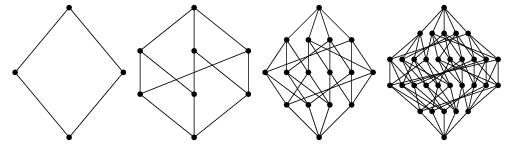
Boolean algebra is an algebraic system that captures the essence of Mathematical Logic and Axiomatic Set Theory. Boolean algebra abstract the algebra of sets.
Table: Analogous concepts in Boolean algebra, set theory, and mathematical logic.
| algebra | set | logic |
|---|---|---|
| meet \(\wedge\) | intersection \(\cap\) | conjunction \(\land\) |
| join \(\vee\) | union \(\cup\) | disjunction \(\lor\) |
| (complement) | complement \(\complement\) | negation \(\lnot\) |
| top \(\top\) | universe | tautology \(1\) |
| bottom \(\bot\) | empty set \(\emptyset\) | contradiction \(0\) |
Theorem (@Stone1936; duality for Boolean algebras): Every Boolean algebra is isomorphic to the algebra of clopen subsets of its Stone space. Every Boolean algebra is isomorphic to a certain field of sets.
A power set lattice \((\mathcal{P}(X), (\cap, \cup), \{\top, \bot\})\) together with the set complement operation \(\complement\) is a Boolean algebra. A Boolean algebra is completely distributive iff it is isomorphic to a power set. Every finite Boolean algebra has a power of two \(2^n\) number of elements. Boolean function \(f: 2^n \mapsto 2\) is an operation on the Boolean domain \(2 = \{0, 1\}\). There are \(2^{2^n}\) Boolean functions in a Boolean algebra of order \(n\).